From the crop
Shade-grown coffee: what it means on an Indian estate
7 November 2026 · 5 min read
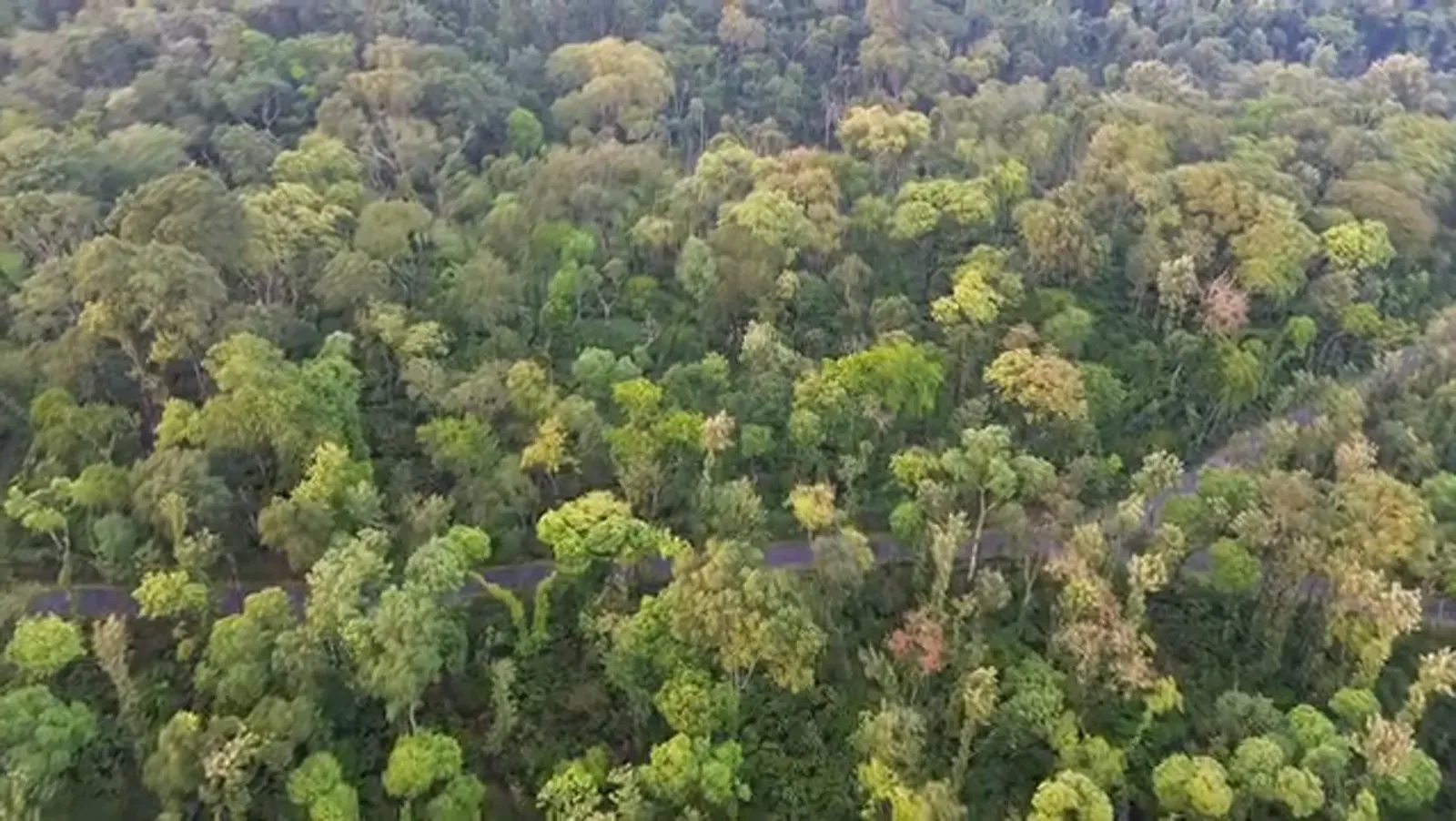
Shade-grown coffee is coffee grown under a canopy of taller trees instead of in full sun. In India that describes nearly everything, so the label alone tells a buyer little. The useful questions are which trees, how many to the acre, and what the canopy is doing. Here are our answers from Nandipura & Indravally Estates, at 3,400 ft in Mudigere, Chikmagalur.
What shade-grown coffee is
The Smithsonian Migratory Bird Center describes these systems as "coffee grown in association with a diversity of trees providing shade".
In India, shade is the default. The Coffee Board of India describes Indian coffee as grown under shade, in "a well-defined two-tier mixed shade canopy, comprising evergreen leguminous trees", and notes that nearly 50 types of shade tree are found in coffee plantations.
So in India the label alone tells a buyer little about a particular farm. The canopy does.
Shade-grown and sun-grown
The comparisons below include studies from outside India, where sun coffee is a real alternative. They point in a consistent direction on wildlife and a less consistent one on crop.
- Birds. In Guatemala, bird abundance and diversity were 30 and 15 percent greater on shaded farms than on sun farms, the Smithsonian reports.
- Pests. In Jamaica, excluding birds from coffee plants brought a 70 percent increase in the proportion of fruit infested with berry borer (same source).
- Weeds. Many weeds can be eliminated in plantations with at least 40 percent canopy cover (same source).
- Crop. A Brazilian field study of Arabica shaded with pigeon pea found that shaded plants produced larger cherries and beans through slower maturation, and a large reduction in production.
- Robusta. A 2020 meta-analysis of thirty experimental studies found that shade improved Robusta growth and yield, and that shade above 30% was associated with reduced beverage quality. Effects varied with tree age, clone and growing conditions.
We make no claim that shade-grown coffee tastes better. The evidence does not support saying that simply, and the only cup result we cite is an earlier blind cupping, which does not describe this year's crop.
Indigenous canopy and silver oak
On our estate silver oak is scarce, which is unusual for an estate. The canopy is the indigenous forest trees left standing from the old plantings, including jackfruit, ficus, fig and Malabar plum. What lives and grows under them is in what grows under the coffee canopy.
Silver oak (Grevillea robusta) is non-native, and the research on it does not support a simple verdict. Both studies below are from Kodagu.
- Wildlife. A study of twenty farms found, "contrary to current ecological thought", that more G. robusta "did not have a negative impact on either abundance or richness of mammals".
- Crop. A study of 113 coffee agroforests found that a rise of 100 non-Grevillea shade trees per hectare increased berry production by 5.6%.
We do not read those results as a case against one tree. They are a reason to ask what else is standing over the coffee.
How many shade trees an acre
We average 30 to 40 shade trees an acre. That is our own practice, not a standard for anyone else.
A tree count is only a rough guide to shade, because trees differ in size and spread. We have not published a canopy cover percentage or a tree spacing, so we will not offer one here. The 40 percent and 30% figures above measure cover, not trees, and our number should not be set against them.
Shade on our Robusta
Robusta is roughly 70% of India's output, which makes Robusta-specific shade research particularly relevant here.
Our estate was a complete Arabica zone until the 1980s. Two Arabica crops in a row came in low. N.M. Jayaram had seen Robusta growing on a trip to Balehonnur, and on his return he planted it, among the first Robusta in the area. How we run those blocks now has its own post.
In a film published in September 2026, Karthik Pattada, another planter, walked the blocks. His observation was that the shade is held at exactly what Robusta needs, "not less and not more". Those are his words, and not a measurement of ours.
What shade does not do
Shade is one part of the crop. The 1991-92 crop was one of the lowest the estate had picked, and we concluded that Robusta at this scale needs irrigation. From 1996 the investment went into ponds, and there are eight now.
Separately, the 113-farm Kodagu study above found that irrigation raised berry production by 16% and liming by 20%, and the authors warn that "recommendations based on an understanding of shade tree management alone can be misleading with regard to crop production".
What else lives in the canopy
Black pepper, in more than one variety, climbs the same trunks that shade the coffee, and we raise our own coffee and pepper plants in our own nursery. Bee colonies settle in the shade trees on their own and work the coffee blossom. We take a share of the honey and leave the rest. The estate is unfenced to wildlife, which has a cost: gaur and elephants ended a drip trial on one block.
What the certificates say
The estate holds Rainforest Alliance certification under the Sustainable Agriculture Standard 2020 v1.2, and AtSource+, through a group certificate under Olam Food Ingredients India. We are also a K.P.A. member estate. We do not present any of these as proof of a shade level.
Other labels go further. The Smithsonian's Bird Friendly programme is built around habitat, and its farms must be 100% organic certified. It is not among the credentials listed in our brochure.
Three questions for any estate
- Which tree species make up the canopy?
- Roughly how many trees stand on an acre?
- Can you visit and see them?
Our answers are above. If you buy green coffee, send an enquiry. If you want to stand under the trees, visits are by request and free.
Questions
- What is shade-grown coffee?
- Coffee grown under a canopy of taller trees rather than in full sun. The Coffee Board of India says all Indian coffee is grown under shade, so the useful questions here are which trees, how many and how they are kept.
- Is silver oak bad for coffee?
- The evidence is mixed. One Kodagu study found more silver oak did not reduce mammal abundance or richness. Another found that more non-Grevillea shade trees raised berry production. Silver oak is scarce on our estate.
- How many shade trees an acre does coffee need?
- We know of no single right number. We average 30 to 40 shade trees an acre. That is our own practice and not a standard for anyone else.
- Is Rainforest Alliance a shade-grown certificate?
- Our estate holds Rainforest Alliance certification under a group certificate through Olam Food Ingredients India. We do not present that credential as a measurement of our canopy cover. Ask any estate what its canopy actually is.