Estate diary
Pepper, bees and jackfruit: what grows under our coffee canopy
10 October 2026 · 3 min read
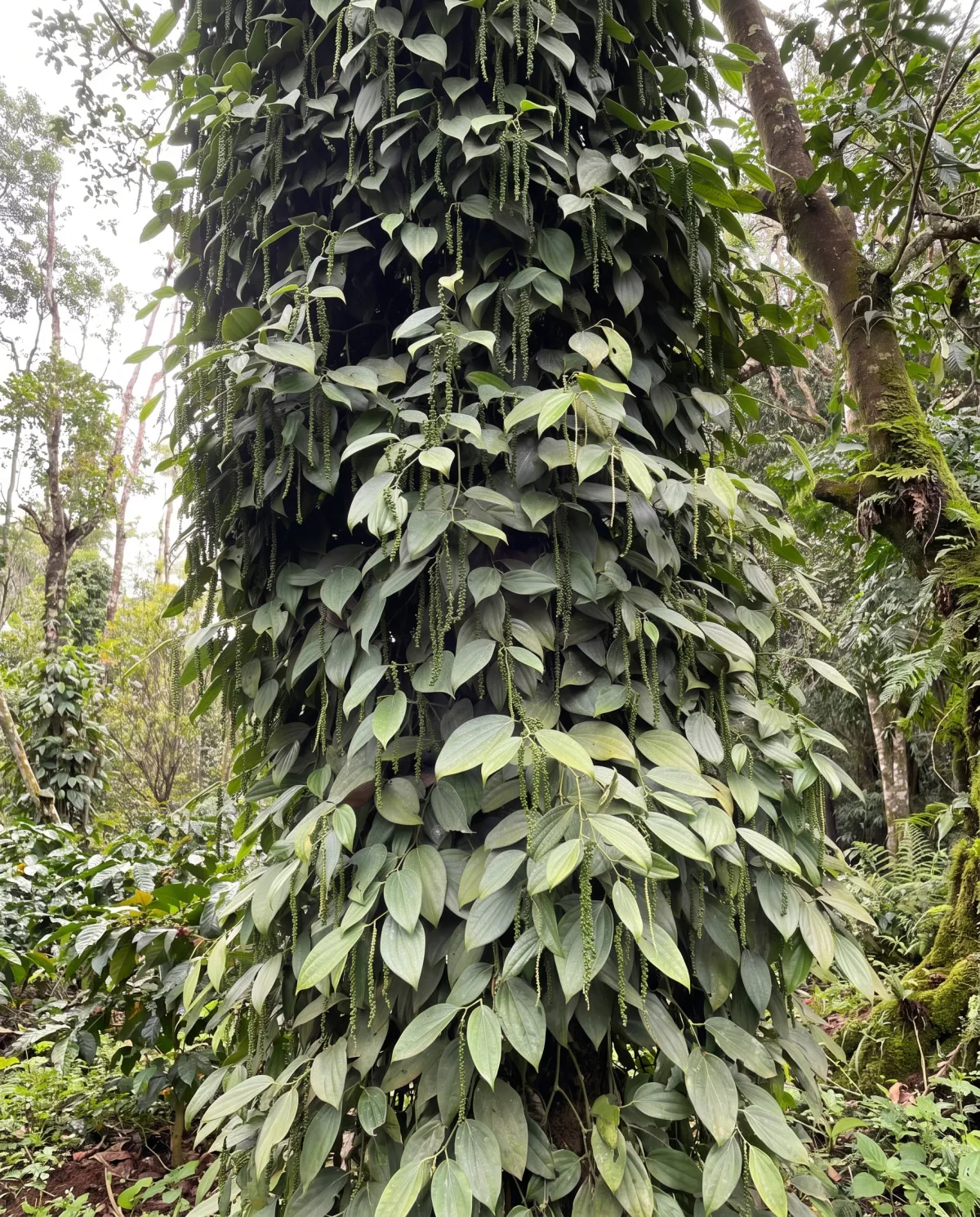
A coffee estate in Mudigere is not a field of coffee. At Nandipura the coffee is the lowest layer of a forest that was already standing, and most of what grows on the estate grows on, under or between the shade trees.
Key takeaways
- The canopy is indigenous forest: jackfruit, ficus, fig and Malabar plum, thirty to forty trees an acre. Silver oak is scarce.
- Pepper climbs the shade trees. Bees settle in them. Lemons, avocados and arecanut grow alongside the coffee.
- The estate is unfenced to wildlife, and its irrigation is built around the gaur and elephants that come through.
Why indigenous shade instead of silver oak?
Silver oak is the usual shade tree on estates in this district. Nandipura has very little of it. The shade here is the forest left standing from the old plantings: jackfruit, ficus, fig and Malabar plum.
The estate keeps thirty to forty shade trees to the acre on average. A planter who walked the Robusta blocks in September described the shade as held at what Robusta needs, "not less and not more". That is his reading, not a measurement, but it is the balance the estate works to.
Where does the pepper grow?
On the shade trees. Black pepper vines climb the same trunks that cover the coffee, so one tree carries two crops. Pepper thrives on virgin soil rich in humus.
The estate grows more than one variety of pepper. We will name them here once the estate confirms the names in writing.
Why does the estate keep bees?
For pollination first and honey second. Colonies settle on the shade trees on their own. They work the coffee blossom when it opens, which is part of why the crop sets the way it does. We take a share of the honey, late in the season, and leave the rest.
Visitors notice the blossom before anything else. Anne-Laure Hennequin wrote that its scent is "a bit jasminy and orangy, with some lemontree blossom nuances".
What else grows here?
- Lemons and avocados, under the same shade as the coffee. Most of what reaches the table at the estate was picked that morning.
- Arecanut, planted on both sides for additional shade. The seedlings came from Sagara.
- Coffee and pepper seedlings, raised in the estate's own nursery rather than bought in. Shricharan Jayaram describes the choice of seed material as the first decision on a plantation.
What about the wildlife?
The estate is unfenced to wildlife. Gaur and elephants come through. The estate once laid spot-jet drip irrigation on one block and abandoned it after the animals damaged the lines. The irrigation now runs on sprinklers fed from the estate's ponds, with the lines laid differently.
A healthy forest is the growing method, not a side effect of it. The estate page describes the walk through the blocks, and visits are by request for anyone who wants to see the canopy in person.
Questions
- Which shade trees grow over the coffee at Nandipura?
- Indigenous forest trees left standing from the original plantings, mainly jackfruit, ficus, fig and Malabar plum, at thirty to forty trees an acre. Silver oak, the usual shade tree on Chikmagalur estates, is scarce here.
- Does Nandipura grow anything besides coffee?
- Yes. Black pepper climbs the shade trees, bees settle in them, and lemons, avocados and arecanut grow on the same ground. The estate raises its own coffee and pepper plants in its own nursery.
- Do wild animals come onto the estate?
- Yes. The estate is unfenced to wildlife and gaur and elephants come through. Drip irrigation on one block was abandoned after they damaged the lines.