From the crop
From cherry to parchment: how coffee is processed at Nandipura
10 October 2026 · 3 min read
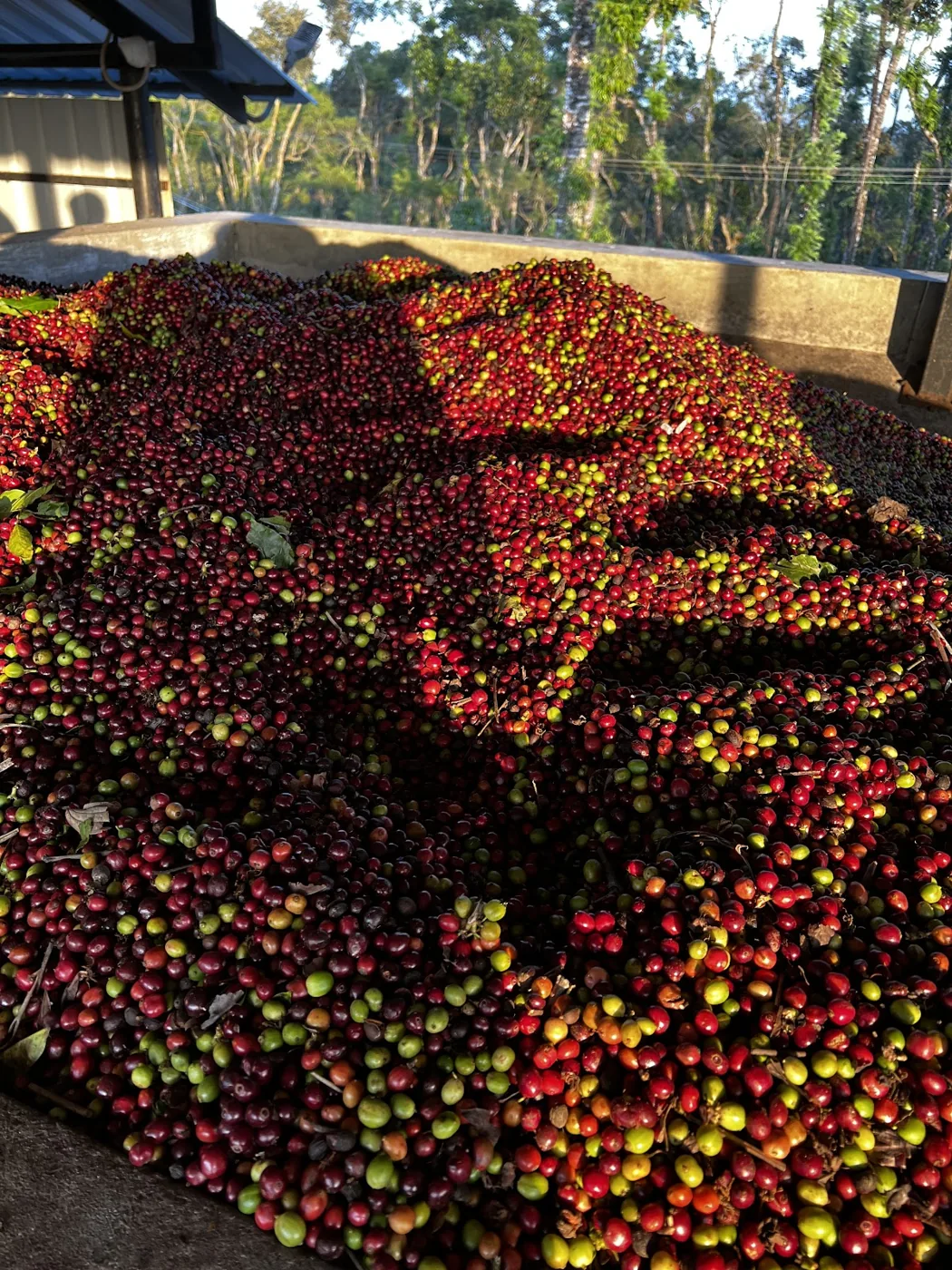
The flavour of a coffee is mostly decided on the tree. Processing can only keep it or lose it. At Nandipura the work between picking and grading is built around one rule: nothing ripe waits.
Key takeaways
- Pickers go through each block several times a season and take only ripe cherry.
- Washed lots are pulped the day they are picked, on a line built for twenty-five tonnes a day.
- Coffee is sun-dried on the estate, turned by hand, then graded by eye and by cup.
1. Handpicked, in rounds
Only ripe cherry leaves the tree. Pickers go through the same block several times across the season rather than stripping it once. It costs more labour. The Arabica micro-lots are kept separate by block and by picking round.
2. Pulped the same day
Cherry is pulped the day it is picked. Nothing waits overnight, so nothing ferments before the estate decides it should.
The pulping line is built for twenty-five tonnes of cherry a day, twenty-five thousand kilos, at six to seven tonnes an hour. It is larger than the current crop on purpose, because the estate planned it for the coffee to increase. A 150 KVA generator runs the pulper first and the sprinklers after.
3. Washed gently
The coffee is washed slowly and without force. The aim is a clean bean, not a fast one. The flavour built on the tree is the flavour the estate wants to keep.
4. Sun-dried on the estate
The coffee is dried on the estate's own yard, turned by hand, and brought down to stable moisture at whatever pace the weather allows. Rain sets the timetable, not the other way round.
5. Graded
Every batch goes through visual evaluation and cup tasting. Only the beans that pass carry the estate's name forward.
6. Kept traceable
Each lot stays tied to the ground it came from, so every roasting batch can be traced to a single estate and, for the micro-lots, to a block.
Where do the three lots differ?
| Lot | Process | What happens differently |
|---|---|---|
| Arabica micro-lots | Washed | Kept apart by block and picking round through pulping and drying, and cup-scored before release |
| Robusta parchment | Washed | Sold with the parchment layer on; the line holding a Certificate of Merit, and the one shipping to Europe |
| Cherry bulk | Natural | Whole cherry dried in the sun with the fruit left on; heavier, deeper and sweeter in the cup |
Buyers interested in the Robusta should read what a buyer should know about Nandipura's Robusta parchment. The lots themselves are described on the estate page.
When can you see it running?
Processing happens during the picking season. Karthik Pattada, the planter who filmed the Robusta blocks in September, has said he plans to come back in December to film the pulper running. If he does, that footage will be posted in the journal. Until then, visits are by request.
Questions
- How is coffee processed at Nandipura estate?
- In six steps. Ripe cherry is handpicked over several rounds, pulped the same day, washed gently, sun-dried on the estate and turned by hand, graded by eye and by cup, and kept traceable to the block it came from. Cherry bulk is the exception; it is dried whole with the fruit left on.
- How much cherry can the Nandipura pulper handle?
- The pulping line is built for twenty-five tonnes of cherry a day, at six to seven tonnes an hour. It was deliberately sized larger than the current crop, because the estate expects its production to grow.
- What is the difference between washed and natural coffee at Nandipura?
- Washed coffee, which includes the Arabica micro-lots and the Robusta parchment, has the fruit pulped off on the day of picking before it is washed and dried. Natural coffee, sold as cherry bulk, is dried in the sun with the whole fruit still on the bean, which makes it heavier and sweeter in the cup.