From the crop
Arabica or Robusta: a grower's view
25 October 2026 · 2 min read
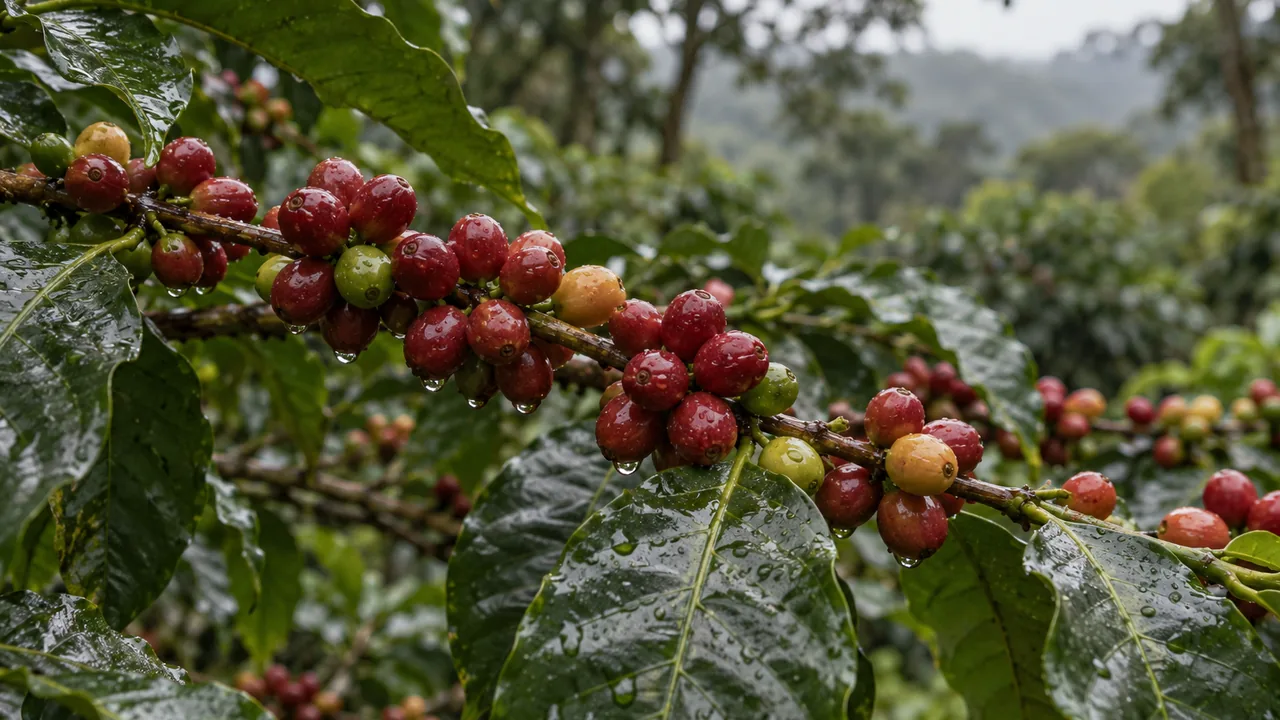
Two low Arabica crops prompted our first Robusta planting. Until the 1980s, the estate was entirely Arabica. Shricharan Jayaram's father saw Robusta during a visit to Balehonnur and planted it when he returned. It was among the first Robusta plantings in this area.
We still grow both at Nandipura & Indravally Estates in Mudigere, Chikmagalur. Arabica micro-lots and Robusta parchment are both part of the present crop. The Arabica vs Robusta question here begins with that planting decision and continues through the work each crop requires.
Twenty years and forty-five years
Shricharan gives Arabica a replanting cycle of about 20 years. For Robusta, his reckoning is around 45 years, provided the coffee is picked well.
Asked about leaving Robusta without replanting, his answer returns to the plant: carrying a large crop year after year weakens it. He puts particular weight on establishment when replanting. Replanting also brings newer selections onto the estate.
The Robusta described in September ranged from two years old to 35–40 years old. Part of a block dating from the grandfather's time had been replanted that season; more was planned for the following year. These are plantings at different stages, with renewal already under way.
We raise our own coffee plants in the estate nursery. Shricharan identifies selection of seed material as an important first decision in planting.
The shade the Robusta grows under
Across the estate, the recorded average is 30–40 shade trees per acre. Silver oak is scarce. Indigenous forest trees left standing from the British-era plantings form the canopy.
During the filmed walk through the Robusta blocks, Karthik Pattada described the shade as appropriate for Robusta. That was his observation of the blocks he saw.
Robusta at this scale needed water
The crop of 1991–92 was among the lowest the estate had picked. The conclusion drawn was that growing Robusta at this scale required irrigation. Investment in ponds began in 1996; the estate now has eight.
At the pond shown in the film, three 20 HP submersible pumps serve the irrigation system. A 150 KVA generator runs the pulper first and the sprinklers afterwards.
One block had a trial of spot-jet drip irrigation. Gaur and elephants damaged it, and the trial was abandoned. That failure is part of our irrigation history alongside the ponds and pumps.
A crop expectation with a limit
For the Robusta, the stated expectation is an average of about 30 bags an acre. Shricharan explains why he does not aim higher: asking too much of the plant weakens it.
The estate's answer remains both. Arabica continues in micro-lots kept apart by block and picking round, through pulping and drying. Robusta continues in plantings of different ages, with replanting and irrigation part of its management. The decision to add Robusta began after two difficult Arabica years; today, both crops remain on the ground.